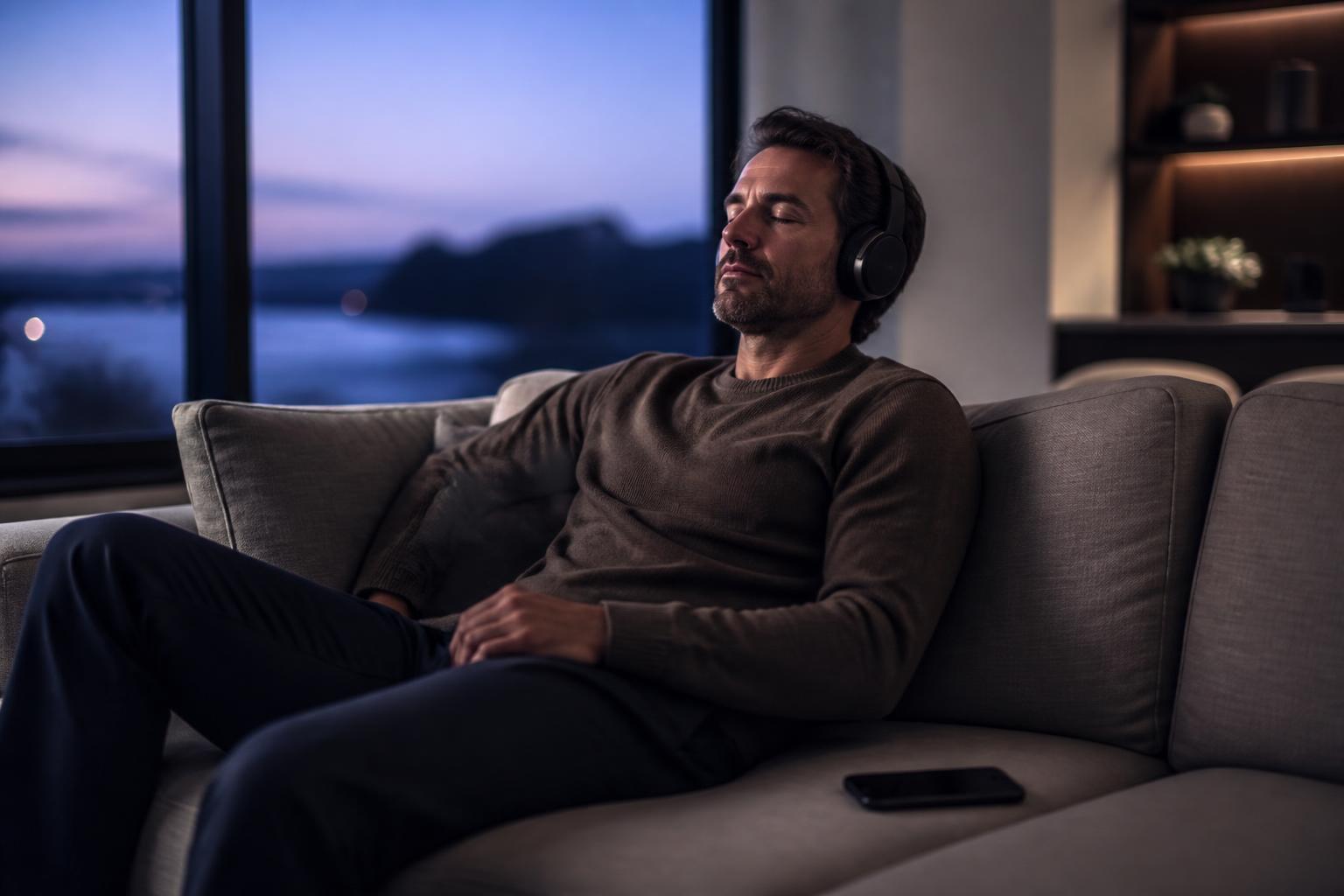
Many of us have racing minds these days, and many products have been designed to deal with that. Among them are Innerflo and Calm, both promising to help slow your mind down.
Calm is a giant in the industry. It has a huge library of meditations, Sleep Stories, and calming sounds, with some read by movie stars. Innerflo is a newer app that builds you a personal plan of binaural beats to gently guide your brain toward calm, focus, or sleep.
The main question you need to answer when picking between these two products is, “Do you want something soothing to listen to, or something built just for your brain?” Let’s look at how each one works and which is best suited for whom.
What do you feel like listening to?
What do you want your brain to do?
Two Different Answers to the Same Problem
Relaxation apps have become the first thing people try when they’re stressed or can’t sleep well, like a step between doing nothing and seeing a therapist. Most apps, Calm included, work like a streaming service. You get a huge catalog and scroll until you find something. A meditation for anxiety, a story for bedtime, rain sounds for focus. The app's job is to have so much good stuff that you always find something.
Innerflo doesn’t work like that. It treats your stress or sleep trouble almost like a signal-processing question. Play one sound frequency in your left ear and a slightly different one in your right, and your brain hears a third beat in between. Research has tied this phenomenon to changes in mental state. So instead of a library to dig through, you get sessions built around one goal.
Thousands of options
One evolving plan
Meet the Two Contenders
A precision tool
Innerflo starts you off with a quick check-in, about 10 minutes, covering how you handle stress, how you sleep, and what your day looks like. From there, it builds a frequency plan, with sessions running 15 to 30 minutes that move through different brainwave ranges (delta, theta, alpha, beta, gamma). These brainwaves help with winding down, focusing, or falling asleep. A team of neurocognitive musicology experts built the program, and it keeps adjusting based on how you rate each session. Your plan syncs across many devices once you log in.
An entertainment library for wellness
Calm catalog offers:
- Guided meditations for anxiety, stress, gratitude, focus
- More than 500 Sleep Stories, new ones added weekly
- Narrators like Matthew McConaughey and Harry Styles
- Music made for focus
- White noise, brown noise, green noise
- A Breathe Bubble for when stress hits right now
- A kids' section with Peppa Pig and Winnie the Pooh
The app gives new users a structured start through the 7 Days of Calm program, and streaks and mindful minutes sync with Apple Health to motivate you if that’s your thing.
Innerflo gives you a precision tool, while Calm gives you an entertainment library aimed at wellness. That’s the difference, and it runs through everything from the science to the price tag.
What Innerflo Actually Targets
- DeltaDeep rest / sleepDeep rest / sleep
- ThetaRelaxation / inward focusRelaxation / inward focus
- AlphaCalm alertnessCalm alertness
- BetaFocus / active thinkingFocus / active thinking
- GammaHigher cognitive activityHigher cognitive activity
Commonly associated brainwave ranges
How Innerflo Builds a Session
An Innerflo session doesn’t use background noise. The way it works is that, if you play 40 Hz into one ear and 44 Hz into the other, your brain picks up a 4 Hz beat sitting inside the theta range, tied to deep relaxation. Every session is built around a target range like that. The app calls its method progressive entrainment, meaning the beat changes slowly through the session instead of holding one tone for 20 minutes straight.
The difference between the two tones is what your brain perceives. Illustration only, not an EEG reading.
A morning session for focus uses the faster beta and gamma ranges. A wind-down session before bed uses slow delta and theta instead. You can adjust how long sessions run, and the app keeps asking you to rate how each one felt to improve your experience. That's the one thing Calm can't really match. A library can suggest content, but it can't rebuild itself around your results the way Innerflo does.
One Session Can Shift Over Time
Example of progressive frequency movement, not a fixed session template.
There are some things to keep in mind in terms of practical experience with the app. You need headphones, since each ear has to get its own frequency. And the effect isn't instant. It builds up the more you stick with it, not all at once on day one. People who treat it like an actual habit (15 minutes, headphones on, same time each day) tend to get the most out of it. People expecting an instant off-switch for stress usually end up disappointed. This is true no matter which app you pick.
What the Science Says about Each
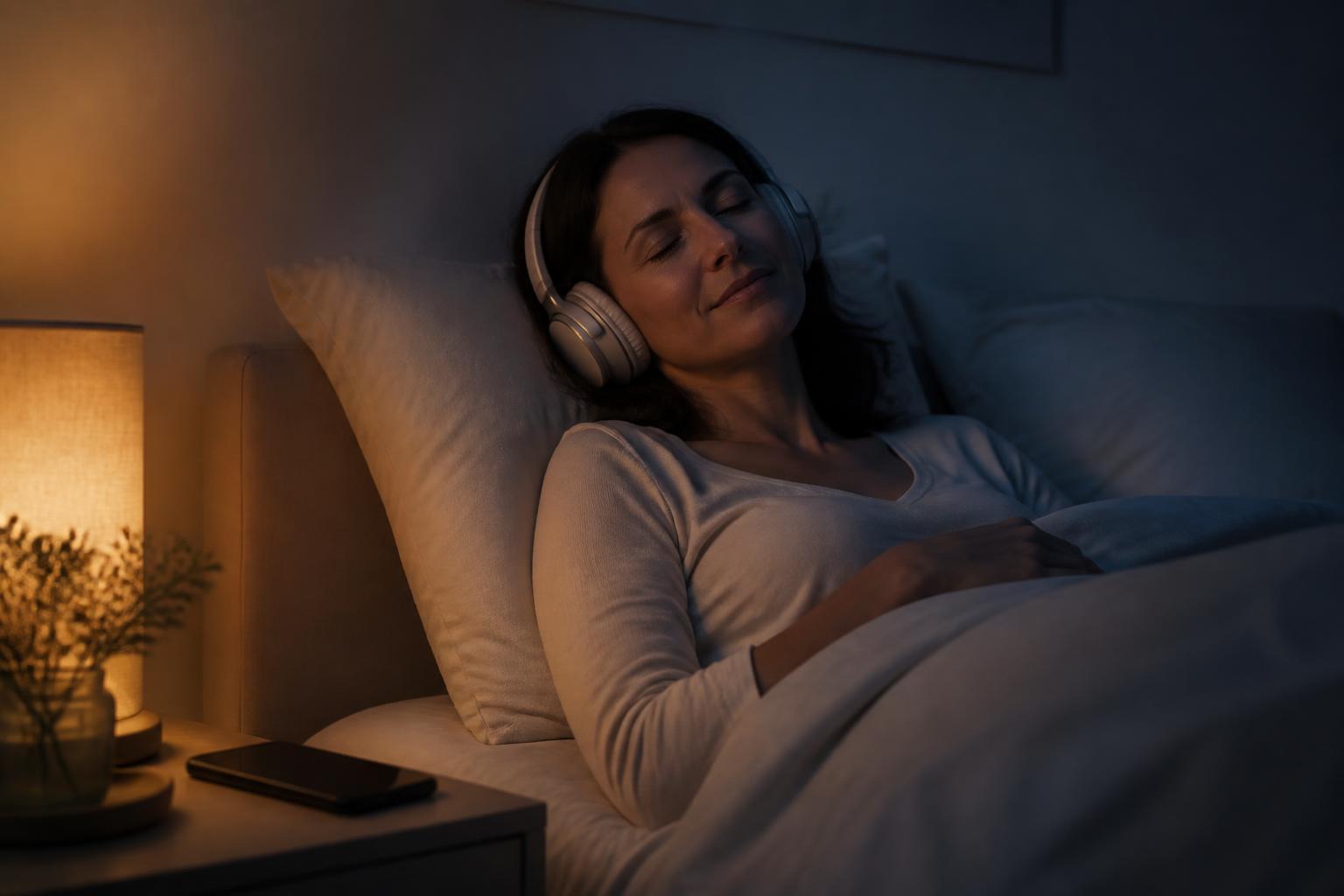
Binaural beats do have real research behind them, but there are limits you need to know. One meta-analysis of 22 studies found a medium but fairly consistent effect on thinking, anxiety, and pain. Theta frequency beats specifically cut anxiety by a meaningful amount. The same review found longer listening sessions work better than short clips, which lines up with how Innerflo builds its sessions.
However, the evidence isn't uniform. Memory and attention results were all over the place, so it's fair to call binaural beats promising rather than proven.
Neither app treats anything. If anxiety or insomnia is seriously affecting your life, talk to a real professional, and use either app alongside that.
How Strong Is the Evidence?
- Anxiety / RelaxationPromising
- Longer Listening SessionsSome supportive evidence
- Memory / AttentionMixed
Binaural-beat research is encouraging in some areas, but results vary between studies.
What Calm Gives You
- Meditation
- Sleep Stories
- Focus Music
- Nature Sounds
- Breathe Bubble
- Kids Content
Calm's strength is range. There's usually something available for almost any mood or situation.
Calm vs Innerflo on Price
Calm comes out cheaper no matter which plan you pick, and its yearly price is one of the best deals in wellness apps. But you're paying for access to a library, and that only pays off if you keep opening the app and browsing. Innerflo costs more per month, but you're paying for a program built around one goal, and you can try a shorter plan if you don't want a full-year commitment.
Broad access to a large wellness library
A plan that adapts around your chosen goal
Where Each App Falls Short
- Requires headphones
- Benefits may take repeated sessions
- Less variety than Calm
- Requires patience and consistency
- Huge library can become overwhelming
- Requires browsing and choosing content
- Celebrity narration does not necessarily equal better outcomes
- Billing reputation on Trustpilot is something to consider
Innerflo vs Calm at a Glance
- Main approachInnerfloPersonalized binaural-beat planCalmWellness content library
- SetupInnerfloGuided check-inCalmBrowse and choose
- Session lengthInnerflo15–30 minCalmVaries
- Headphones requiredInnerfloYesCalmNo
- PersonalizationInnerfloAdaptive planCalmRecommendations
- Sleep contentInnerfloFrequency-based sessionsCalmSleep Stories, sounds, music
- Focus contentInnerfloBeta/gamma sessionsCalmMusic, meditation, sounds
- Kids contentInnerfloNoCalmYes
- Celebrity narratorsInnerfloNoCalmYes
- Best forInnerfloOne specific goalCalmBroad variety
- PriceInnerfloHigherCalmLower
Who Each App Makes More Sense For
Innerflo May Be Better If You:
- Have one specific goal like sleep, stress, or focus
- Prefer a plan over browsing
- Are willing to use headphones
- Want the experience to adapt over time
- Like structured daily routines
Calm May Be Better If You:
- Want a large variety of content
- Enjoy Sleep Stories
- Want content for the whole family
- Prefer listening without headphones
- Care most about lower yearly cost
Innerflo vs Calm: The Verdict
Calm is still a good option for two kinds of people. Families who want the kids' content and something for every mood in the house, and anyone who mainly cares about the lowest yearly price on a meditation library.
But if you're the person this comparison is usually written for, someone with one specific problem, maybe a mind that won't quiet down at bedtime, focus that keeps slipping at work, constant stress, Innerflo is the better pick.
It builds a plan around you instead of making you dig through a library hoping something works. Its sessions match what the research actually says helps, longer sessions, used consistently. Its reputation for treating customers fairly on Trustpilot is a lot stronger than Calm's too.
A relaxation app only helps if you keep coming back to it and trust the company running it, and Innerflo checks both boxes right now.
Try it the way the evidence suggests: headphones on, one session a day for two weeks, and let the plan adapt to you before you judge it.
- PERSONALIZED
- Plan
- 15–30 MIN
- Sessions
- ADAPTIVE
- Feedback loop
- 1 GOAL
- At a time
Best suited to people who want a structured, personalized way to work on sleep, stress, or focus without scrolling through a giant content library.